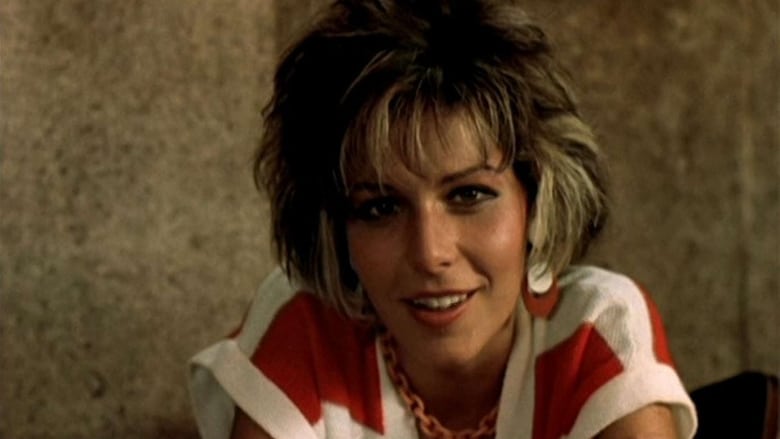
Films are moving images and often a single image needs the context of the images that come before and after to be meaningful. But sometimes they can stand alone. The image is sufficiently expressive and does not need to be further understood, or it is visually beautiful, and needs no explanations. Some makes you want to enlarge them and hang them up on the wall.
"An image, frozen in time" is where I take a particular still image, one that I happen to like, and write about it, in just a few words.
The first one is connected to last week's post about Jacques Tourneur as it is from his Out of the Past (1947). It was hard to chose a specific image from that incredibly rich and beautiful film so I might do more but this is for today.
The stars of the film are Robert Mitchum, Jane Greer and Kirk Douglas, but the part played by Virginia Huston is equally memorable. She plays Ann, the girlfriend of Jeff (played by Mitchum) and in some ways she is the real victim in the film. She is kind and sweet where the others are cynical, scheming and cruel, yet she too will lose in the end, without having done anything wrong. The image is from a scene in a car when Jeff reveals his past, that he is not the man Ann thinks he is, and about his previous affair with Kathie (played by Greer). Her expression is so delicate, not angry or upset, she is just pained and sad, and it is enough to make you cry.
Fredrik on Film
Sir, you arouse the artist in me. (As the bartender said in The Sin of Harold Diddlebock.)
Sunday, 19 May 2013
Wednesday, 15 May 2013
Jacques Tourneur
"I never saw her in the daytime. We seemed to live by night. What was left of the day went away like a pack of cigarettes you smoked. I didn't know where she lived. I never followed her. All I ever had to go on was a place and time to see her again. I don't know what we were waiting for. Maybe we thought the world would end."That is how Jeff Bailey (played by Robert Mitchum) describes his relationship with Kathie Moffat (Jane Greer) in Out of the Past (1947), and it is also a description for any number of films by Jacques Tourneur, the master of shadows and possibly the most graceful image maker there ever was.
Another quote that is very revealing, almost as if Tourneur is analysing the themes of his own films, is this from The Curse of the Demon (1957), spoken by a sinister professor:
But where does imagination end and reality begin? What is this twilight, this half world of the mind that you profess to know so much about? How can we differentiate between the powers of darkness and the powers of the mind?That twilight might have been what Paul Willemen was referring to when he wrote in 1975 that "although the films dramatise the conflict between terms A/B, it is the '/' which constitutes the enigmatic pivot upon which Tourneur's films turns." And this is another line from The Curse of the Demon, spoken by the main character played (very well) by Dana Andrews: "Nobody's free from fear. I have an imagination like anyone else. It's easy to see a demon in every dark corner." Tourneur himself once said that "The real horror is to show that we all live unconsciously in fear."
With these quotes most of Tourneur are more or less summed up, fear, darkness, fleeting moments and ambiguity. But it is not so much these motifs as the style in which he made them come alive that matters. There are few who has such a refined, elegant, sombre style of filmmaking, where things stay calm and controlled. It is as if the terror he unleashes is contained by the precision and beauty of each shot. The acting style in his films is subdued, sometimes almost sleepy. When directing his most common suggestion was for the actors to hold back, to quiet down. He wanted them to "lower their voice, eliminate inflections, and give the sentences a different, less dramatic rhythm." as he explained it in an interview in 1971.
Of course, he did not only do horror and thrillers, he also did westerns and adventure, and even a few comedies (much to his surprise), but they were also done in the same style, and with the same evident grace and elegance. There is a case to be made for his first film in colour, Canyon Passage (1946), as being the most beautifully shot film in the whole of film history. It is a kind of western but the term does not in the least explain the power and allure of that film, which is filled with life, characters and stories, all interacting, and where the focus lies on the community rather than the individual, even though it has a central character, Logan Stuart , played by Dana Andrews. Stars in my Crown (1950) is another magnificent film about community, and also about race, racism and the Ku Klux Klan, with a great performance by Juano Hernandez, as well as Joel McCrea as the kind preacher who is the central figure in the community and the film. It shares with the best of Tourneur the same grace and beauty, this strange quality of the images which is distinctly his.
During the 1940s he hardly ever faltered, with his three supernatural films Cat People (1942), I Walked With a Zombie (1943), The Leopard Man (1943) and the thriller Berlin Express (1948) being the high points together with Canyon Passage and Out of the Past. The 50s are more uneven, but with at least two sublime films, i.e. Stars of My Crown and The Curse of the Demon. After that things got difficult for him, and he mainly worked in TV, and I have seen very little of that. I want to see everything though, because Tourneur has such immense powers that even if he only manages to get one shot right in an entire film, it will still be worth it.
Here is a clip from The Way of a Gaucho (1952), an uneven film perhaps, but still good and filled with unforgettable compositions and movements:
There are two things here, first the beauty of the colours and the shadows and second the ambiguity. Did she see a man, or did she just imagine him? It is exactly this that is at the heart of Tourneur's art, shadows and ambiguity, the zone between the real and the unreal, the art of the uncanny.
Wednesday, 8 May 2013
Bergman's favourite films
It is well-known that Ingmar Bergman was a cinephile, and he watched films on a daily basis. After he moved to Fårö, far from the cinemas of the big city, he had his own cinema were he received prints of all films that were released in Sweden, and where he had his own archive of films on tape, 16mm prints and 35mm prints.
He also made lists. Here is one he made in 1994 of his then 11 favourite films:
Körkarlen / The Phantom Carriage (Victor Sjöström 1921)
The Circus (Charlie Chaplin 1928)
La passion de Jeanne d'Arc / The Passion of Joan of Arc (Carl Dreyer 1928)
Le Quai des brumes / Port of Shadows (Marcel Carné 1938)
Sunset Boulevard (Billy Wilder 1950)
Rashomon (Akira Kurosawa 1950)
La Strada (Federico Fellini 1954)
Kvarteret Korpen / Raven's End (Bo Widerberg 1963)
Andrei Rublev (Andrei Tarkovsky 1966)
Dyrygent / The Conductor (Andrzej Wajda 1980 aka The Orchestra Conductor)
Die bleierne Zeit / Marianne and Juliane (Margarethe von Trotta 1981)
Here is another one, called "Bergman's 20th century", made in order to celebrate Swedish cinema at the turn of the millennium at Göteborg International Film Festival. It is 35 Swedish films Bergman considered to be particularly good. Notice that the list above has Raven's End by Widerberg whereas this list has Widerberg's Elvira Madigan instead.
Körkarlen / The Phantom Carriage
Gösta Berlings saga / The Saga of Gösta Berling (Mauritz Stiller 1924)
Rågens rike (Ivar Johansson 1929)
Söderkåkar / Shanty Town (Weyler Hildebrand 1932)
Karl Fredrik regerar / Karl Fredrik Reigns (Gustaf Edgren 1934)
Dollar (Gustaf Molander 1938)
Karriär / Career (Schamyl Bauman 1938)
Ett brott / A Crime (Anders Henrikson 1940)
Den allvarsamma leken (Rune Carlsten 1945)
Pengar - en tragikomisk saga (Nils Poppe 1946)
Bara en mor / Only a Mother (Alf Sjöberg 1949)
Flicka och hyacinter / Girl With Hyacinths (Hasse Ekman 1950)
En djungelsaga / The Flute and the Arrow (Arne Sucksdorff 1957)
Syskonbädd 1782 / My Sister My Love (Vilgot Sjöman 1966)
Här har du ditt liv / Here's Your Life (Jan Troell 1966)
Elvira Madigan (Bo Widerberg 1967)
Som natt och dag / Like Night and Day (Jonas Cornell 1969)
Harry Munter (Kjell Grede 1969)
Äppelkriget / The Apple War (Tage Danielsson 1971)
Vem älskar Yngve Frej (Lars Lennart Forsberg 1973) Made for TV
Det sista äventyret / The Last Adventure (Jan Halldoff 1974)
Trollflöjten / The Magic Flute (Ingmar Bergman 1975)
Giliap (Roy Andersson 1975)
Långt borta och nära (Marianne Ahrne 1976)
Ett anständigt liv / A Decent Life (Stefan Jarl 1979)
Barnens ö / Children's Island (Kay Pollack 1980)
Mamma (Suzanne Osten 1982)
Den enfaldige mördaren / The Simple-Minded Murderer (Hasse Alfredson 1982)
Midvinterduell (Lars Molin 1983) Made for TV
Mitt liv som hund / My Life as a Dog (Lasse Halström 1985)
Amorosa (Mai Zetterling 1986)
Miraklet i Valby / The Miracle in Valby (Åke Sandberg 1989)
Glädjekällan (Richard Hobert 1993)
Potatishandlaren (Lars Molin 1996) Made for TV
Fucking Åmål / Show Me Love (Lukas Moodysson 1998)
The list is certainly not the last word on which 35 films to watch, and my own 35 titles would be different, but for newcomers to non-Bergman Swedish films it is a good place to start. But avoid Ett brott / A Crime, a really bad film. 1940 was a good year in Swedish cinema, but Ett brott is not a reason why.
Career, by Schamyl Bauman, however is a very good film. Bauman was somebody Bergman was enthusiastic about, and envious of. He was also important for Hasse Ekman. I will be writing more about Bauman in a later post, long overdue.
He also made lists. Here is one he made in 1994 of his then 11 favourite films:
Körkarlen / The Phantom Carriage (Victor Sjöström 1921)
The Circus (Charlie Chaplin 1928)
La passion de Jeanne d'Arc / The Passion of Joan of Arc (Carl Dreyer 1928)
Le Quai des brumes / Port of Shadows (Marcel Carné 1938)
Sunset Boulevard (Billy Wilder 1950)
Rashomon (Akira Kurosawa 1950)
La Strada (Federico Fellini 1954)
Kvarteret Korpen / Raven's End (Bo Widerberg 1963)
Andrei Rublev (Andrei Tarkovsky 1966)
Dyrygent / The Conductor (Andrzej Wajda 1980 aka The Orchestra Conductor)
Die bleierne Zeit / Marianne and Juliane (Margarethe von Trotta 1981)
Here is another one, called "Bergman's 20th century", made in order to celebrate Swedish cinema at the turn of the millennium at Göteborg International Film Festival. It is 35 Swedish films Bergman considered to be particularly good. Notice that the list above has Raven's End by Widerberg whereas this list has Widerberg's Elvira Madigan instead.
Körkarlen / The Phantom Carriage
Gösta Berlings saga / The Saga of Gösta Berling (Mauritz Stiller 1924)
Rågens rike (Ivar Johansson 1929)
Söderkåkar / Shanty Town (Weyler Hildebrand 1932)
Karl Fredrik regerar / Karl Fredrik Reigns (Gustaf Edgren 1934)
Dollar (Gustaf Molander 1938)
Karriär / Career (Schamyl Bauman 1938)
Ett brott / A Crime (Anders Henrikson 1940)
Den allvarsamma leken (Rune Carlsten 1945)
Pengar - en tragikomisk saga (Nils Poppe 1946)
Bara en mor / Only a Mother (Alf Sjöberg 1949)
Flicka och hyacinter / Girl With Hyacinths (Hasse Ekman 1950)
En djungelsaga / The Flute and the Arrow (Arne Sucksdorff 1957)
Syskonbädd 1782 / My Sister My Love (Vilgot Sjöman 1966)
Här har du ditt liv / Here's Your Life (Jan Troell 1966)
Elvira Madigan (Bo Widerberg 1967)
Som natt och dag / Like Night and Day (Jonas Cornell 1969)
Harry Munter (Kjell Grede 1969)
Äppelkriget / The Apple War (Tage Danielsson 1971)
Vem älskar Yngve Frej (Lars Lennart Forsberg 1973) Made for TV
Det sista äventyret / The Last Adventure (Jan Halldoff 1974)
Trollflöjten / The Magic Flute (Ingmar Bergman 1975)
Giliap (Roy Andersson 1975)
Långt borta och nära (Marianne Ahrne 1976)
Ett anständigt liv / A Decent Life (Stefan Jarl 1979)
Barnens ö / Children's Island (Kay Pollack 1980)
Mamma (Suzanne Osten 1982)
Den enfaldige mördaren / The Simple-Minded Murderer (Hasse Alfredson 1982)
Midvinterduell (Lars Molin 1983) Made for TV
Mitt liv som hund / My Life as a Dog (Lasse Halström 1985)
Amorosa (Mai Zetterling 1986)
Miraklet i Valby / The Miracle in Valby (Åke Sandberg 1989)
Glädjekällan (Richard Hobert 1993)
Potatishandlaren (Lars Molin 1996) Made for TV
Fucking Åmål / Show Me Love (Lukas Moodysson 1998)
The list is certainly not the last word on which 35 films to watch, and my own 35 titles would be different, but for newcomers to non-Bergman Swedish films it is a good place to start. But avoid Ett brott / A Crime, a really bad film. 1940 was a good year in Swedish cinema, but Ett brott is not a reason why.
Career, by Schamyl Bauman, however is a very good film. Bauman was somebody Bergman was enthusiastic about, and envious of. He was also important for Hasse Ekman. I will be writing more about Bauman in a later post, long overdue.
Etiketter:
great films,
Ingmar Bergman,
lists,
Swedish cinema
Wednesday, 1 May 2013
Oblivion
Beware that this post discuss important plot points, including the ending of the film.
Oblivion is the kind of film which it is easy to criticise, or even ridicule, for its obvious nods to earlier films, its many illustrious precursors from which has borrowed this and that. I said something myself to that effect on twitter. But then I thought better of it because there is nothing wrong with showing awareness of the history of the film one is making, and since it is easy to imagine Joseph Kosinski (who came up with the idea for Oblivion and also directed it) having been in love with science fiction since he was a little boy and now, when in a position to make his own contributions, he wants to acknowledge that. Most films borrow heavily from what has come before, but it is particularly transparent with films like this. Since I really liked Oblivion I see no reason to quibble about it and will instead focus on the good things. It was well-paced, sharp and focused, with the humour thankfully kept to a minimum (without being self-important) and with spectacular visuals. It was a treat for the eyes. I also liked the importance of art in the film; books, music and paintings.
The sociologist Jane Jacobs once wrote:
One thing I was wondering as I watched the film was whether Kosinski or anyone else ever thought of switching the gender roles. Now the woman is staying at home, watching a computer, while the man is out and about, fighting and repairing drones. There is no reason why it could not have been the other way around, no reason except traditionalism or possibly sexism. Having the man at home and the woman out on the field would have made the film more original than it is now, and more fun. (Or having women in both parts.) Maybe they thought about it, but felt that it would damage the film's financial success. If so, was that an accurate assumption? I do not know.
Something I do know however is that there was a ridiculous mistake towards the end, a mistake made by the humans who were hiding underground. When they were ready to go off to the final battle they opened the door to their cave and was immediately attacked by the drones waiting outside. What kind of madness was that? They have lived in mortal fear of these drones for 60 years, but now, when they are about to strike back, they seem to have forgotten all about them. Why did they not, for example, open a peephole, for a look outside first? I understand that the filmmakers wanted to have an attack but it could have been handled in many different ways so as to remain plausible (for example by having the drones hiding and not appearing until it was too late for the rebellious forces to spot them). Such unnecessary silliness is something that is all to common in films, and it can only be explained by laziness on the part of the filmmakers. It is not there because the genre demands it, and it is not there because the story demands it. And it is not me being silly for questioning such a thing in what is after all a science fiction film. I am only asking the film to adhere to its own laws, its own reality, which is that these fighters would not go out without making sure it was safe to do so. It is a small thing, but I get annoyed because it is so common and so unnecessary.
But even so, Oblivion remains one of the highlights so far this year.
--------------------------------------------
*Our memories are for me a key aspect of what makes us human, and that defines who we are as individuals. We are, partly, what we remember.
Oblivion is the kind of film which it is easy to criticise, or even ridicule, for its obvious nods to earlier films, its many illustrious precursors from which has borrowed this and that. I said something myself to that effect on twitter. But then I thought better of it because there is nothing wrong with showing awareness of the history of the film one is making, and since it is easy to imagine Joseph Kosinski (who came up with the idea for Oblivion and also directed it) having been in love with science fiction since he was a little boy and now, when in a position to make his own contributions, he wants to acknowledge that. Most films borrow heavily from what has come before, but it is particularly transparent with films like this. Since I really liked Oblivion I see no reason to quibble about it and will instead focus on the good things. It was well-paced, sharp and focused, with the humour thankfully kept to a minimum (without being self-important) and with spectacular visuals. It was a treat for the eyes. I also liked the importance of art in the film; books, music and paintings.
The sociologist Jane Jacobs once wrote:
We need art /.../ to help explain life to us, to show us meanings, to illuminate the relationship between the life that each of us embodies and the life outside us. We need art most, perhaps, to reassure us of our own humanity.which is actually exactly how it works in Oblivion. The two main characters, Jack (Tom Cruise) and Victoria (Andrea Riseborough) are not humans, they are clones, but this is not apparent. There are two things that makes Jack in particular human. First his memories. Victoria is less human because she has no memories, but Jack has the same sensibilities and (repressed) memories* as his origin, the ur-Jack. The other thing is his interest in art. When he finds a book he picks it up and reads it. He listens to music, he saves paintings. Through art his humanity is reassured, and consequently life on earth. But does this make all his clones equally human, as human as the first Jack, the original. The ending of the film puts this in sharp relief, whether intentional or not. When "our" Jack is killed in the end, and a new Jack appears, is there a difference between the two? The film seems to suggest that they are the same.
One thing I was wondering as I watched the film was whether Kosinski or anyone else ever thought of switching the gender roles. Now the woman is staying at home, watching a computer, while the man is out and about, fighting and repairing drones. There is no reason why it could not have been the other way around, no reason except traditionalism or possibly sexism. Having the man at home and the woman out on the field would have made the film more original than it is now, and more fun. (Or having women in both parts.) Maybe they thought about it, but felt that it would damage the film's financial success. If so, was that an accurate assumption? I do not know.
Something I do know however is that there was a ridiculous mistake towards the end, a mistake made by the humans who were hiding underground. When they were ready to go off to the final battle they opened the door to their cave and was immediately attacked by the drones waiting outside. What kind of madness was that? They have lived in mortal fear of these drones for 60 years, but now, when they are about to strike back, they seem to have forgotten all about them. Why did they not, for example, open a peephole, for a look outside first? I understand that the filmmakers wanted to have an attack but it could have been handled in many different ways so as to remain plausible (for example by having the drones hiding and not appearing until it was too late for the rebellious forces to spot them). Such unnecessary silliness is something that is all to common in films, and it can only be explained by laziness on the part of the filmmakers. It is not there because the genre demands it, and it is not there because the story demands it. And it is not me being silly for questioning such a thing in what is after all a science fiction film. I am only asking the film to adhere to its own laws, its own reality, which is that these fighters would not go out without making sure it was safe to do so. It is a small thing, but I get annoyed because it is so common and so unnecessary.
But even so, Oblivion remains one of the highlights so far this year.
--------------------------------------------
*Our memories are for me a key aspect of what makes us human, and that defines who we are as individuals. We are, partly, what we remember.
Wednesday, 24 April 2013
William Wyler
In an article in Theatre Arts from 1947, Hermine Rich Isaacs complains about the fact that since William Wyler's films "flourish neither the mark of an insistent personality, nor the aura of experiment, nor the cachet of conscious striving after artistic effect" he is being undeservedly neglected by archives and museums. Isaacs makes the claim though that Wyler is a true master, and just because he is not obviously artistic he should not be treated with this lack of interest (or lack of respect). Isaacs complaint is somewhat compromised by the fact that Wyler was perhaps the most celebrated filmmaker in the US at that time, but at the same time she has a point because with the exception of André Bazin, Wyler has been treated a bit off-handedly by the most influential of critics and scholars. In the post-war consensus he is sometimes seen as the opposite of the true glory of Hollywood and seen as boring, safe, dispassionate and audience-conscious as opposed to the likes of Nicholas Ray, Douglas Sirk and Vincente Minnelli. Andrew Sarris placed Wyler in the category Less Than Meets the Eye and it is noticeable that when people today talk about Bazin's writings they mention that he wrote about Orson Welles, Jean Renoir and the neorealist filmmakers. Less often is it said that Bazin idolised Wyler (and Anthony Mann), probably because Wyler feels less cool and cutting edge. Bazin's fullest exploration of Wyler comes in the essay "William Wyler: or the Jansenist of Directing", reprinted in Bazin at Work, and Bazin's enthusiasm is not surprising since the astonishing body of work of Wyler is enough to humble must critics. At least from 1936 he hardly ever failed, and even though the films were more uneven after the mid-50s there was still enough great scenes, great images and above all great acting to make up for any flaws that the films might have had.
I have been reading interviews with Wyler and they have been very interesting. He talks a lot about auteurs, and he argues that somebody like Preston Sturges can rightfully be call one, but he says about himself that "I could hardly call myself an auteur - although I'm one of the few American directors who can pronounce the word correctly." At another point he says that he is not a composer but more of a conductor. What he means is that the films he makes have been written by others, such as Lilliam Hellman, or Robert Sherwood, or Emily Brontë. But at the same time he also says, and others have said as much, that he only made the films he wanted to make, films he felt strongly about, that he was very much involved from pre-production to post-production, that he wanted final cut (and usually got it), that he always worked on the scripts (telling the writer what to take out and what to add) and that he added things in the films that was from his own life. In addition, after the Second World War he created his own independent production company, together with George Stevens and Frank Capra, called Liberty Films. So even if he did not want to call himself an auteur he still wanted, and had, the power to go his own way (with the exception of strict censorship rules). Isaacs interviewed Wyler and when asked what makes for a good film Wyler answers "A story, a passion and a craft." That is apparent in his films and although Oscar nominations and winnings are not necessarily a sign of greatness, Wyler was actually nominated for an Oscar for best direction 12 times (a third of all his feature films), and won three times, and three times he was nominated for the Grand Prix/Palme d'or in Cannes, and he won once.
Even though Wyler began as a maker of short westerns, as he came into his own in the mid-30s he was not a genre filmmaker. Primarily he was a witness to family disintegration and punishing social structures and conventions. Visually there are many striking things about Wyler's films, such as the use of deep focus and elaborate compositions, the excellent use of mirrors and staircases. When it comes to do interior compositions Wyler are among the very best, and mirrors are often at the centre of his compositions, like Bergman and Fassbinder. The films are often harsh and uncomfortable, there are a lot of cruelty in them, again like Bergman and Fassbinder. Not cruelty from Wyler towards the characters but cruelty between the characters. Fathers are cruel to their daughters, sons to their fathers, wives to their husbands, and so on, and it rarely ends well. Sometimes in death and despair, sometimes in sadness and regret, and often they are open-ended. Not even a romantic comedy like Roman Holiday (1953) ends in happiness, but in loneliness. Wyler had a deep understanding of suffering it would seem, and of seeing it. He is not the kind of filmmaker who would leave his characters unattended, he sees them all, and shares their pain. Watching Austin Sloper ridiculing and punishing his daughter Catherine in The Heiress is about as painful as it gets in cinema.
And then there are the actors. Ralph Richardson and Olivia de Havilland in The Heiress (1949), Walter Huston in Dodsworth (1936), John Barrymore in Counsellor-at-Law (1933), Laurence Olivier, Fredric March, Miriam Hopkins, Herbert Marshall, Bette Davis in several films. He once said that actors hated him on set but loved him at the award ceremonies, because his punishing direction methods led to remarkable performances. He had a theory that in order to get at the truth of a character the actors has to go beyond acting. The method for getting there was to do retake after retake, to wear down the actors until the acting disappeared and the truth would be revealed, the essence of the character. The actors should not play, they should be. (This is why he was called "90-take Willie" and why he frequently went over budget and over time.) His style of shooting could also be difficult, not least his habit of instead of cross-cutting between actors he would keep them in the same shot, but one with the back against the camera. That meant that one of the two actors had only his/her voice and neck to act with, and could not use the face.
Here are a few favourite parts from his rich oeuvre:
First there is the character Birdie in The Little Foxes (1941), played by Patricia Collinge. She is a sad older woman, treated with contempt by those around her, if they even notice her. It is a heartbreaking character, and performance, and the key here is that Wyler sees her. She is often visible in shots, even if she plays no part, and goes unnoticed by the other characters. It is as if Wyler is the only one aware of the fact that she is there, and her loneliness and fragility is underscored not by focusing in her, but rather by not doing so. She is there, and she suffers, and that is enough. Wyler is good at that, seeing and capturing the emotional state of his characters, and being concerned about them.
The next example is related, and it is from the beginning of Mrs Miniver (1942). The station master is waiting for Mrs Miniver to step of the train, and when she does he says that he wants to show her a new rose he has created. She hesitates but then follows him. She looks at it, and smells it, and when she smells it we see a reflection of the station master in a round mirror. He captures his breath. It is as if he cannot believe his courage and luck, of having approached her, and then having her smell his rose. It is a tiny little thing, but it makes the scene almost disproportionally moving. And of course, we did not have a close-up of him, we were looking at her, smelling the rose. The mirror reflection is behind her.
In the same film, Mrs Miniver and her daughter-in-law Carol (played by Teresa Wright) are out driving when a German fighter plane attacks. Carol is hit, and they take cover in a house. Carol lies down on the floor while Mrs Miniver goes for help. There, in a long take with the camera far away from her body, Carol dies, quiet and alone on a wooden floor. There is no music, just the sound of her sobbing, until it stops. It is such a sad death scene because it is understated and she is all alone on the hard, cold floor.
The next example is from Roman Holiday with Audrey Hepburn and Gregory Peck. When they first meet she is drunk, he is not, and he takes her to his small apartment. She spends the night there, in separate rooms. The next morning she wakes up and has forgotten where she is and how she got there. It is so good, because they are so natural and relaxed. The teasing, the rapport, the combination of amusement and tenderness makes the scene feel wonderfully alive and enchanting. Peck is often rather stiff, or gruff, but not here. And Hepburn is at her best, breezing through the scene.
The last example is the ending of The Children's Hour (1961). The film has some of Wyler's most impressive deep focus compositions and some excellent acting, with several really intense scenes, but it is not one of his best. The last ten minutes though are fantastic. Karen (Audrey Hepburn) is talking a walk and then, sensing something is wrong, turns and runs back to the home that she shares with Martha (Shirley MacLaine). The scene is first lyrical, relaxed and leisurely. But when she runs back it is a series of jump cuts of her face. When she comes back she finds Martha dead, having committed suicide. The cause of this is the malicious gossip in the small town about the two women, and the rumours that they are lesbians. (At least Martha is a lesbian whereas Karen's sexuality is more ambiguous.) The next scene is the funeral, which is short. Karen does not speak to anyone, she does not even look at them. She stands tall, and her contempt is in her body language. Her one-time boyfriend is there to, but she does not acknowledge him. She walks away from the funeral service, still without looking at anybody, just straight ahead. She will have no part of them, or their world. There is no heterosexual reunion between her and the man, instead she walks away alone under some trees, and then she looks up towards the tree tops and the sky. And then she smiles. It is as if she has come to terms with herself, and that she is now one with Martha.
I have been reading interviews with Wyler and they have been very interesting. He talks a lot about auteurs, and he argues that somebody like Preston Sturges can rightfully be call one, but he says about himself that "I could hardly call myself an auteur - although I'm one of the few American directors who can pronounce the word correctly." At another point he says that he is not a composer but more of a conductor. What he means is that the films he makes have been written by others, such as Lilliam Hellman, or Robert Sherwood, or Emily Brontë. But at the same time he also says, and others have said as much, that he only made the films he wanted to make, films he felt strongly about, that he was very much involved from pre-production to post-production, that he wanted final cut (and usually got it), that he always worked on the scripts (telling the writer what to take out and what to add) and that he added things in the films that was from his own life. In addition, after the Second World War he created his own independent production company, together with George Stevens and Frank Capra, called Liberty Films. So even if he did not want to call himself an auteur he still wanted, and had, the power to go his own way (with the exception of strict censorship rules). Isaacs interviewed Wyler and when asked what makes for a good film Wyler answers "A story, a passion and a craft." That is apparent in his films and although Oscar nominations and winnings are not necessarily a sign of greatness, Wyler was actually nominated for an Oscar for best direction 12 times (a third of all his feature films), and won three times, and three times he was nominated for the Grand Prix/Palme d'or in Cannes, and he won once.
Even though Wyler began as a maker of short westerns, as he came into his own in the mid-30s he was not a genre filmmaker. Primarily he was a witness to family disintegration and punishing social structures and conventions. Visually there are many striking things about Wyler's films, such as the use of deep focus and elaborate compositions, the excellent use of mirrors and staircases. When it comes to do interior compositions Wyler are among the very best, and mirrors are often at the centre of his compositions, like Bergman and Fassbinder. The films are often harsh and uncomfortable, there are a lot of cruelty in them, again like Bergman and Fassbinder. Not cruelty from Wyler towards the characters but cruelty between the characters. Fathers are cruel to their daughters, sons to their fathers, wives to their husbands, and so on, and it rarely ends well. Sometimes in death and despair, sometimes in sadness and regret, and often they are open-ended. Not even a romantic comedy like Roman Holiday (1953) ends in happiness, but in loneliness. Wyler had a deep understanding of suffering it would seem, and of seeing it. He is not the kind of filmmaker who would leave his characters unattended, he sees them all, and shares their pain. Watching Austin Sloper ridiculing and punishing his daughter Catherine in The Heiress is about as painful as it gets in cinema.
And then there are the actors. Ralph Richardson and Olivia de Havilland in The Heiress (1949), Walter Huston in Dodsworth (1936), John Barrymore in Counsellor-at-Law (1933), Laurence Olivier, Fredric March, Miriam Hopkins, Herbert Marshall, Bette Davis in several films. He once said that actors hated him on set but loved him at the award ceremonies, because his punishing direction methods led to remarkable performances. He had a theory that in order to get at the truth of a character the actors has to go beyond acting. The method for getting there was to do retake after retake, to wear down the actors until the acting disappeared and the truth would be revealed, the essence of the character. The actors should not play, they should be. (This is why he was called "90-take Willie" and why he frequently went over budget and over time.) His style of shooting could also be difficult, not least his habit of instead of cross-cutting between actors he would keep them in the same shot, but one with the back against the camera. That meant that one of the two actors had only his/her voice and neck to act with, and could not use the face.
Here are a few favourite parts from his rich oeuvre:
First there is the character Birdie in The Little Foxes (1941), played by Patricia Collinge. She is a sad older woman, treated with contempt by those around her, if they even notice her. It is a heartbreaking character, and performance, and the key here is that Wyler sees her. She is often visible in shots, even if she plays no part, and goes unnoticed by the other characters. It is as if Wyler is the only one aware of the fact that she is there, and her loneliness and fragility is underscored not by focusing in her, but rather by not doing so. She is there, and she suffers, and that is enough. Wyler is good at that, seeing and capturing the emotional state of his characters, and being concerned about them.
The next example is related, and it is from the beginning of Mrs Miniver (1942). The station master is waiting for Mrs Miniver to step of the train, and when she does he says that he wants to show her a new rose he has created. She hesitates but then follows him. She looks at it, and smells it, and when she smells it we see a reflection of the station master in a round mirror. He captures his breath. It is as if he cannot believe his courage and luck, of having approached her, and then having her smell his rose. It is a tiny little thing, but it makes the scene almost disproportionally moving. And of course, we did not have a close-up of him, we were looking at her, smelling the rose. The mirror reflection is behind her.
In the same film, Mrs Miniver and her daughter-in-law Carol (played by Teresa Wright) are out driving when a German fighter plane attacks. Carol is hit, and they take cover in a house. Carol lies down on the floor while Mrs Miniver goes for help. There, in a long take with the camera far away from her body, Carol dies, quiet and alone on a wooden floor. There is no music, just the sound of her sobbing, until it stops. It is such a sad death scene because it is understated and she is all alone on the hard, cold floor.
The next example is from Roman Holiday with Audrey Hepburn and Gregory Peck. When they first meet she is drunk, he is not, and he takes her to his small apartment. She spends the night there, in separate rooms. The next morning she wakes up and has forgotten where she is and how she got there. It is so good, because they are so natural and relaxed. The teasing, the rapport, the combination of amusement and tenderness makes the scene feel wonderfully alive and enchanting. Peck is often rather stiff, or gruff, but not here. And Hepburn is at her best, breezing through the scene.
The last example is the ending of The Children's Hour (1961). The film has some of Wyler's most impressive deep focus compositions and some excellent acting, with several really intense scenes, but it is not one of his best. The last ten minutes though are fantastic. Karen (Audrey Hepburn) is talking a walk and then, sensing something is wrong, turns and runs back to the home that she shares with Martha (Shirley MacLaine). The scene is first lyrical, relaxed and leisurely. But when she runs back it is a series of jump cuts of her face. When she comes back she finds Martha dead, having committed suicide. The cause of this is the malicious gossip in the small town about the two women, and the rumours that they are lesbians. (At least Martha is a lesbian whereas Karen's sexuality is more ambiguous.) The next scene is the funeral, which is short. Karen does not speak to anyone, she does not even look at them. She stands tall, and her contempt is in her body language. Her one-time boyfriend is there to, but she does not acknowledge him. She walks away from the funeral service, still without looking at anybody, just straight ahead. She will have no part of them, or their world. There is no heterosexual reunion between her and the man, instead she walks away alone under some trees, and then she looks up towards the tree tops and the sky. And then she smiles. It is as if she has come to terms with herself, and that she is now one with Martha.
Subscribe to:
Posts (Atom)